
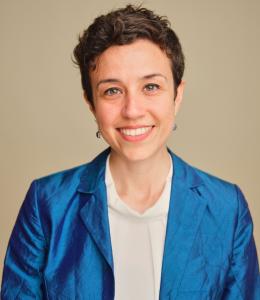
Dr Sara Caneva
Public Engagement Fellow, October 2026 - July 2027
Dr Sara Caneva (1991) is a UK-based Italian composer, researcher, and practitioner with a PhD in Musical Composition (University of Birmingham, 2025) and a Fellowship of the Higher Education Academy (FHEA). She has an internationally active, practice-led research profile with a growing track record of 30+ publications (SZ Sugar/Schott), major composition commissions, conference presentations, awards, and grants in both artistic and scholarly contexts. Her research focuses on interdisciplinary practices that integrate cognition, sensory illusions, spatialised sound, interactive installations and community-based activities across instrumental, electroacoustic, and mixed media. Recent highlights include the multimedia opera Radice Posizione Distanza (2024), the string quartet with electronics Resight (2024), and the collaborative interactive installation Eclipse (2024), all realised with support from renowned international institutions (European Capitals of Culture, European Festivals Fund for Emerging Artists, BEAST, CNArtes Bogotá). Earlier, in 2016–17, Sara was a Y.A.P. fellow at Teatro dell’Opera di Roma, where she composed and conducted the world premiere of a new diptych that included her opera ON/OFF. Her works have since been presented by institutions such as Teatro La Fenice di Venezia, Bludenzer Tage, Salzburg Mozarteum, Fondazione I Teatri, MusiikkItalo Camerata, and others, and broadcast on BBC, RAI, HR, ORF, and France Musique. As a conductor specialising in new music, she has premiered numerous works by leading composers (Zuraj, Balch, Saunders, Bauckholt, and many others), collaborating with ensembles and orchestras across Europe, including BCMG, Ensemble Modern, Schallfeld Ensemble, OPV, and Accademia di Santa Cecilia Ensemble ’900. Since 2021, she has taught various modules in Composition, Orchestration and Music Theory at the University of Birmingham and has led workshops at the University of Cambridge and Royal Birmingham Conservatoire. She is committed to community engagement and inclusivity projects through experimental music practices and serves as MD of CoMA West Midlands.
Project title: Music for Moving Together: Composing with Scottish Country Dance
This practice-led research explores what contemporary compositional practice can discover by immersing fully in Scottish Country Dancing (SCD), its formal and informal structures, inclusive culture, and the musical, emotional and somatic knowledge embedded in its community. The project grows out of my previous investigations on composing with perception-related principles, as well my direct experience as an RSCDS dancing member and SCD class pianist, positioning myself as an insider in both worlds with an international cultural background. Through a mix of community activities, composition, and public events, the project unfolds along three interlinking strands, and three main outputs:
- a new set of music for SCD,
- SCD workshops on embodied listening, and
- a sound installation for public presentation, conceived as a multi-media ‘composer's notebook’ documenting the participatory creative process.
As SCD relies on teamwork and covering to ensure synchronisation and phrasing within sets of multiple couples, eye contact becomes an essential element in the dance. This makes the dance floor somewhat visually saturated and provides a unique context for understanding multimodal listening and movement-music interaction. Given its interdisciplinary nature, my approach to composing will also be informed by existing research in dance, psychology and music cognition, with special attention to how dancers listen.
In this respect, one aspect that particularly motivated me to embark on this trajectory was the experience of collective excitement – typically expressed during an SCD ball – which often seems to correlate with specific musical moments. This raises the question of how musical decisions by the band, as well as compositional choices, foster deeper or more joyful engagement among the dancers, and how SCD’s social and musical dynamics may enrich contemporary music-making beyond traditions.
Although practice-led composition research has advanced considerably, it more rarely explores communal music-making, often prioritising professional or specialist angles. As the music world increasingly recognises the limitations of focusing solely on expert audiences, questions about the balance between specialist knowledge and communal participation, and the role of wellbeing in music-making have become urgent.