
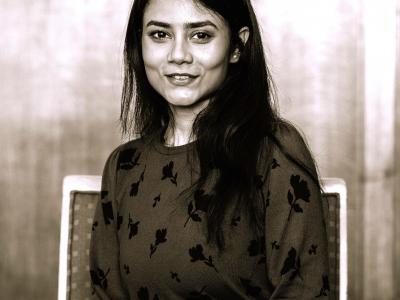
An IASH Work-in-Progress seminar, delivered by Dr Sneha Roy (IASH-CTPI Duncan Forrester Fellow)
When borders produce the state: Everyday bordering in sensitive spaces
Borders are conventionally understood as territorial manifestations of state power- lines drawn, secured, and governed by the nation-state, and found at the end of a state. This paper inverts that analytical direction by arguing that borders are not merely products of the state but are themselves productive of statehood and the nation. Drawing on ethnographic research among Hindu women volunteering with Rashtra Sevika Samiti in the Indian Sundarbans along the India-Bangladesh border, the paper examines how the nation is reproduced through the everyday practices, narratives, and moral worlds of borderland communities. Situated in a deltaic landscape where shifting rivers, erosion, and ecological uncertainty render permanent border-making difficult, the Sundarbans challenges conventional assumptions about fixed territoriality. Building on Bradley Parker’s Continuum of Boundary Dynamics and Jason Cons' notion of sensitive space, the paper extends the concept beyond state projects of territorial governance to examine how borderland residents actively participate in the production of belonging and bordering. I show how women, through community networks, religious mobilisation, and everyday pedagogies of vigilance, become informal actors in border governance, translating national anxieties into local practices that distinguish insiders from perceived outsiders. By foregrounding the experiences and agency of borderland women, the paper contributes to a decolonial anthropology of borders that shifts attention from the state as the sole producer of territorial order to border communities as active participants in imagining, negotiating, and reproducing the nation. In doing so, it argues that the border is not simply where the state ends, but where the state is continuously made and remade.
Meeting ID: 384 971 962 716 1
Passcode: nV6Rg79e