
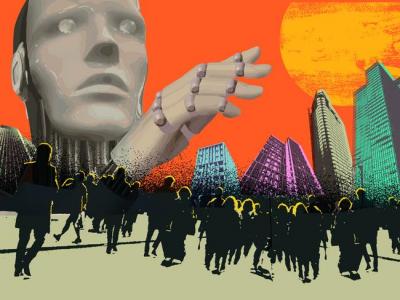
Heritage Collections Postdoctoral Fellow Dr Emrah Atasoy and his colleague Dr Matthew Leggatt have published an article in Times Higher Education about teaching utopian and dystopian fiction, science fiction and speculative fiction in higher education. You can read the full article here.
Young people have become more interested in dystopian narratives in recent years, research has found. Students of all ages and backgrounds watch dystopian films and TV shows, play dystopian video games and read dystopian fiction. Increasingly, they bring this interest into the classroom where they inevitably encounter real-world dystopian markers that remind them of the proximity of dystopia today.
We don’t always see the same interest in utopian visions. Few remain subscribed to the idea that capitalism can offer utopia, something that seemed possible during moments in the 19th and 20th centuries. But this hasn’t been the starting point for new ideas of what might replace it. Instead, so-called capitalist realism – the perception that, as Fredric Jameson put it, “it is easier to imagine the end of the world than the end of capitalism” – has now become endemic. Imagining better worlds has never seemed more difficult.
As educators, should we be afraid of the rise of dystopia in the post-truth age, or should we view it as an opportunity to cultivate critical thinking and to better understand the present and tomorrow? Between us, we’ve spent nearly a decade teaching utopian and dystopian fiction, science fiction and speculative fiction in higher education. Here is advice based on what has worked for us...