
The latest round, for visits between August 2026 and July 2027, is now closed.
Applications are invited for Heritage Collections Research Fellowships from postdoctoral scholars in any area of the Arts, Humanities and Social Sciences, to carry out research based on any of the Heritage Collections held at the University of Edinburgh in 2026-27.
The University’s collections include archives, art, manuscripts, musical instruments, and rare books, representing four centuries of collecting, and occupying over 100km of shelving. They are managed by a multi-disciplinary team of curators as well as collection management and conservation experts. The collections offer almost limitless possibilities for research across a wide range of scholarly disciplines. The Fellowships offer privileged access to the collections and Heritage Collections team, enabling forms of collections-based research which are difficult to accomplish through ordinary reading room services. The Fellows are expected to be correspondingly engaged with the Centre for Research Collections (CRC), contributing to projects or events as appropriate.
IASH provides an enviable location in one of the world’s most intellectually inspiring cities, together with a dynamic network of international connections. Edinburgh has a rich cultural heritage of scholarship and creativity that continues to the present day. In this haven of libraries and archives, galleries and music venues – all set amid iconic architecture – IASH helps scholars to take the humanities beyond campus to engage the public and work with organisations in a variety of sectors.
The Institute welcomes visiting researchers from across the world. Since 1970, over 1,500 Fellows have stepped through our doors. Up to 30 researchers are in residence at any one time in our amazing – and eclectic – nineteenth-century building just on the edge of the University’s central campus, boasting views of the Meadows. From more than 70 countries, IASH Fellows form a global alumni community, and many career-long connections begin at the Institute.
Please enjoy this recording of our recent webinar for applicants wishing to apply for the next round, offering insights into our programmes as well as advice and tips: Webinar Recording
2026-27 Heritage Collections Suggested Research Areas:
Institutional Histories, Decoloniality and Colonial Impact
We would particularly welcome applications linked to decoloniality, the University Race Review and the University of Edinburgh’s colonial impact.
This may include specific research into provenance of the collections, colonial histories, past principals, staff or students, or research connected to specific sites on campus e.g. Edinburgh College of Art, Kings Building Campus, Edinburgh Futures Institute and Old College.
Heritage Collections offer a range of objects and materials which explore or illustrate the intertwined concepts of identity and inequality. There is significant research potential not only in collection material and objects, but also in the records connected to the infrastructures and individuals related to the collections’ histories.
Sustainability, Environmental Emergencies and Regeneration
Heritage Collections are deeply committed to environmental sustainability, social and civic responsibility. Our work is shaped by an awareness that social, ethical, and environmental considerations must guide decisions around the stewardship, use and development of collections.
The collections offer valuable opportunities to explore the interconnected themes of sustainability, climate science, ecological change, and the histories of resource extraction institutionally and more generally, including the impact of past actions on vulnerable communities and ecologies both locally and in other parts of the world. They also serve as a lens through which to consider how collecting practices, ethics, access, and interpretation can evolve in response to global environmental emergencies.
We welcome proposals that engage critically with these themes and ideas aiming not only to minimise harm, but to restore and revitalise environmental and cultural systems.
International Connections: Focus on Africa
There is a wealth of material within the collections which either originates in Africa, or records relationships between Scotland and Africa. It offers huge research potential, but much of it has been little explored.
Find out more (including Collections Catalogues): https://library.ed.ac.uk/heritage-collections
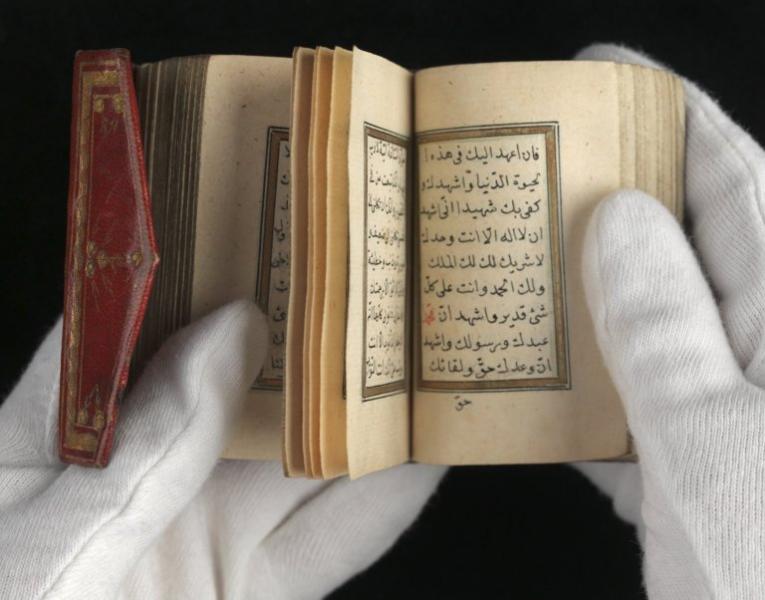
What does a Heritage Collections Research Fellowship offer?
IASH hosts a lively scholarly community of visiting fellows. It is a supportive environment for postdoctoral researchers, while also offering networking opportunities with successful mid-career and eminent senior scholars. The Institute occupies a historic building with private courtyard and leafy views – perfect for uninterrupted thinking, reading and writing. Yet there is also plenty of opportunity to socialise and share ideas.
In short, a 2026-27 Heritage Collections Research Fellowship provides:
- Research visit at the University of Edinburgh for three to six months
- Bursary of £2,000 per month
- International travel allowance of up to £500 if required
- Dedicated office space at IASH, University e-mail and library access
- Library workspace with privileged access to collections, support from curatorial and technical staff, and access to the facilities of the Digital Scholarship Centre
- A University mentor from the Centre for Research Collections (CRC) or any School within the College of Arts, Humanities and Social Sciences
- Weekly Fellows’ Lunch to build community
- Collegial work-in-progress seminar series for testing new ideas
- Calendar of engaging events at the Institute and College
Who can apply?
We warmly welcome applications from independent researchers, employees of Universities and other organisations engaged in research from around the world. Selection will be subject to the immigration rules governing the UK. Applicants should be employed for purposes including investigative research (or be an independent researcher) and have a suitable project or study to undertake using a specific collection.
Applicants must have been awarded a doctorate at the time of application, and normally within the last five years; if you have not yet graduated, you must be able to produce a transcript, testamur, or a letter of completion/eligibility to graduate as part of your application. You should not have held a previous Fellowship at the Institute for Advanced Studies in the Humanities. Those who have held temporary and/or short-term appointments are eligible to apply.
Application procedure
The closing date
The closing date for the receipt of the next round of applications (for visits from August 2026 to July 2027) was 17:00 GMT on 24 April 2026. Applications received after that date will not be considered. Decisions will be communicated in July. Please ensure that you supply a valid email address so that you can be contacted quickly after decisions are made.
The application form
The application portal is now closed.
Any additional supporting documents connected with an application should be emailed to iash@ed.ac.uk.
References
- In addition to the application form, a minimum of two and a maximum of three confidential references are required.
- Applicants should ask their referees to email their reference to the Director at iash@ed.ac.uk by 24 April 2026.
- Referees should comment on the nature and quality of the research proposal, as well as on the qualifications of the applicant. One referee should certify the successful viva (defence) and final examination of the candidate’s PhD thesis.
Notes
- Consideration will be given to the academic record and the publications of all applicants and their capacity to disseminate their views among a community of like-minded people. Candidates must give evidence of any contact they have made with researchers at the University of Edinburgh, are required to make such contact before submitting their applications, and those who can evidence the relevance of their proposed project to the University of Edinburgh research community will be regarded favourably. Particular weight will be placed on the quality and timeliness of the project proposed, and we encourage innovative and interdisciplinary topics and approaches.
- Applications must detail the specific collection with which they plan to engage while at IASH. Fellows are expected to participate in the HC’s activities (such as delivering a workshop or seminars on their chosen topic, or curating an exhibition at the Library) and a proposal for an event should be described in the application.
- Fellows are expected to become involved in the HC and to commit to agreed objectives such as contextualizing a collection through collections based work or the provision of an exhibition, workshop, seminar or online learning resources such as a series of blog posts. This will form part of the evaluation of candidates.
- Only fully completed formal applications will be considered. It is the responsibility of each applicant to ensure that all documentation is complete, and that referees submit their reports to IASH by the closing date. Candidates may like to submit a copy of any one article or publication that is thought to be especially relevant to the research proposal and Fellowship submission. It must be emphasised, however, that no such submitted publication will be returned to the candidate.
- The Institute was established in 1969 by the then Faculty of Arts to promote enquiry of the highest standards in the Humanities, broadly conceived. It began to receive Fellows in 1970, and is now located as an independent institute within the College of Arts, Humanities and Social Science. Inter-departmental and inter-disciplinary study has always been encouraged.
- Fellows must make the Institute their main place of work for the duration of the Fellowship. It is expected that Fellows will be in residence throughout the tenure of their Fellowship and will contribute fully to the life of the Institute during that time. Fellows give at least one seminar presentation during their tenure, and submit a report on their research at the end of their Fellowship. No regular teaching is required.
- For information about the scope of work undertaken at the University of Edinburgh, see Edinburgh Research Explorer, or browse through the staff pages of the College of Arts, Humanities and Social Sciences.
- Applicants looking for suitable accommodation in Edinburgh may find these links useful.
In order to take full advantage of the seminars and lectures which take place during the semesters and to meet with staff in the College of Arts, Humanities and Social Sciences, applicants are encouraged to apply for periods that will include at least part of one of the semesters.