
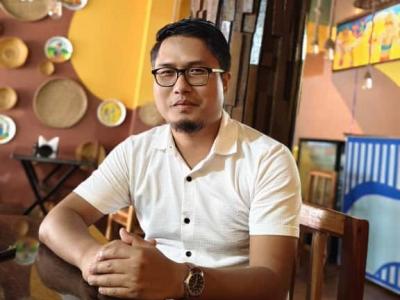
An IASH Work-in-Progress seminar, delivered by Dr Dustin Lalkulhpuia (British Council 90th Anniversary Research Fellow, 2026)
Can the Indigenous Think? Three Concepts (Tlawmngaihna, Jhum, Kuknalim) from Northeast India
In the Indian imagination, Northeast India is a byword for backwardness: poor, remote, and tribal. By the ecological measure, the picture inverts: the region is among the most forested and biologically rich places on earth, and its poorest communities keep rising to reject the mining, drilling, and dams meant to develop them. That refusal is not economic but philosophical. It turns on a single difference, whether land is a resource to be used or a relative to be lived with, and that difference, this talk argues, sits close to the root of the climate crisis itself.
The talk works through three concepts from the region, each carried in a word that does not translate cleanly. Tlawmngaihna is a Mizo ethic of unobligated care and responsibility, in which personhood and dignity arise through humility and service to others. Jhum, a system of rotational shifting cultivation practised across Northeast India, is based on ecological cycles and land regeneration, and rooted in an Indigenous ontology of relation. Though long dismissed as primitive farming, it holds a theory of time in which fertility comes through rest, and land is treated as kin that must, in a sense, consent.Kuknalim, a Naga assertion of sovereignty, binds land, people, and future into a single body and redefines victory as endurance rather than conquest. The concepts come from different communities and do different work, and the talk resists folding them into one tidy philosophy.
This talk seeks to reposition these concepts as theoretical interventions in global debates on ethics, ecology, and sovereignty. Instead of viewing them as cultural practices, it treats them as epistemic and ontological frameworks with relevance for today’s world. In other words, these concepts are critical ‘knowledge tools’ that can help us make sense of, and practically address, urgent global challenges.
Meeting ID: 387 413 976 148 588
Passcode: jk7Dn2rE